
The Complete Guide To Legally Getting Married In Portugal as a Canadian
Planning a destination wedding in Portugal is one thing. Understanding whether that wedding will actually be legally binding is another.
For Canadian couples dreaming of a ceremony among Portugal's beautiful landscape, the legal side of marrying abroad can feel like the most confusing part of the entire process, full of conflicting advice online and questions that are hard to find straight answers to.
The good news: Portugal is one of the more accessible countries in Europe for foreign couples to marry in, with no residency requirement and a process that can largely be handled remotely.

Venue | @theyeatman Florist | @andreiaferrasstudio
Still, "accessible" doesn't mean simple.
Before you get too far into planning, there's an important distinction to understand: the difference between a ceremony that's legally binding and one that's symbolic, a distinction that shapes the rest of your wedding planning.
With that in mind, this guide walks through exactly what it takes for a Canadian couple to legally marry in Portugal: the ceremony types recognized under Portuguese law, and why so many couples choose to separate their legal marriage from their celebration altogether, an option not every couple knows is possible when planning a destination wedding.
Which Types of Marriage Ceremonies Are Legal in Portugal
Let's start with the basics. Portugal legally recognizes two forms of marriage: civil marriage and Catholic marriage performed under the concordat between the Holy See and the Portuguese state.
A civil ceremony is performed by a civil registrar (conservador) and is valid regardless of either partner's religion.
A Catholic ceremony is performed by a priest and is automatically registered as a legal marriage under Portuguese civil law, provided the required paperwork (including a certificate from the parish confirming the couple's freedom to marry in the Church) is filed correctly.

Venue | @theyeatman
No other ceremony type, including humanist, symbolic, interfaith, or ceremonies performed by officiants without legal authority under Portuguese law, creates a legally binding marriage on its own.
A beach or villa ceremony performed by an independent celebrant is legally symbolic only. If you want that ceremony to also be your legal marriage, you need a civil registrar present, or you need to complete civil marriage separately.
Why Couples Marry Legally at Home and Celebrate in Portugal
Many Canadian couples complete their legal marriage in their home town (often a short civil ceremony at a local registry office or courthouse) before travelling to Portugal, then hold their main ceremony and reception in Portugal as a symbolic event.
This approach has practical advantages:
It removes the pressure of Portugal's document submission deadlines from the wedding planning timeline.
It allows the couple to choose any ceremony format, location, or officiant without needing that ceremony to meet Portuguese legal requirements.
It avoids translation and apostille costs for documents that would only be needed for the Portuguese legal process.
It reduces the risk of a registrar requesting additional documentation close to the wedding date.
“If having your entire wedding day be 100% legal matters to you, book your civil registrar first, before locking in your venue or date. Registrars have limited availability, especially during peak wedding season (May–October), and some venues aren’t set up to accommodate a registrar’s requirements on-site. Confirming this piece early gives you far more flexibility with everything else.”
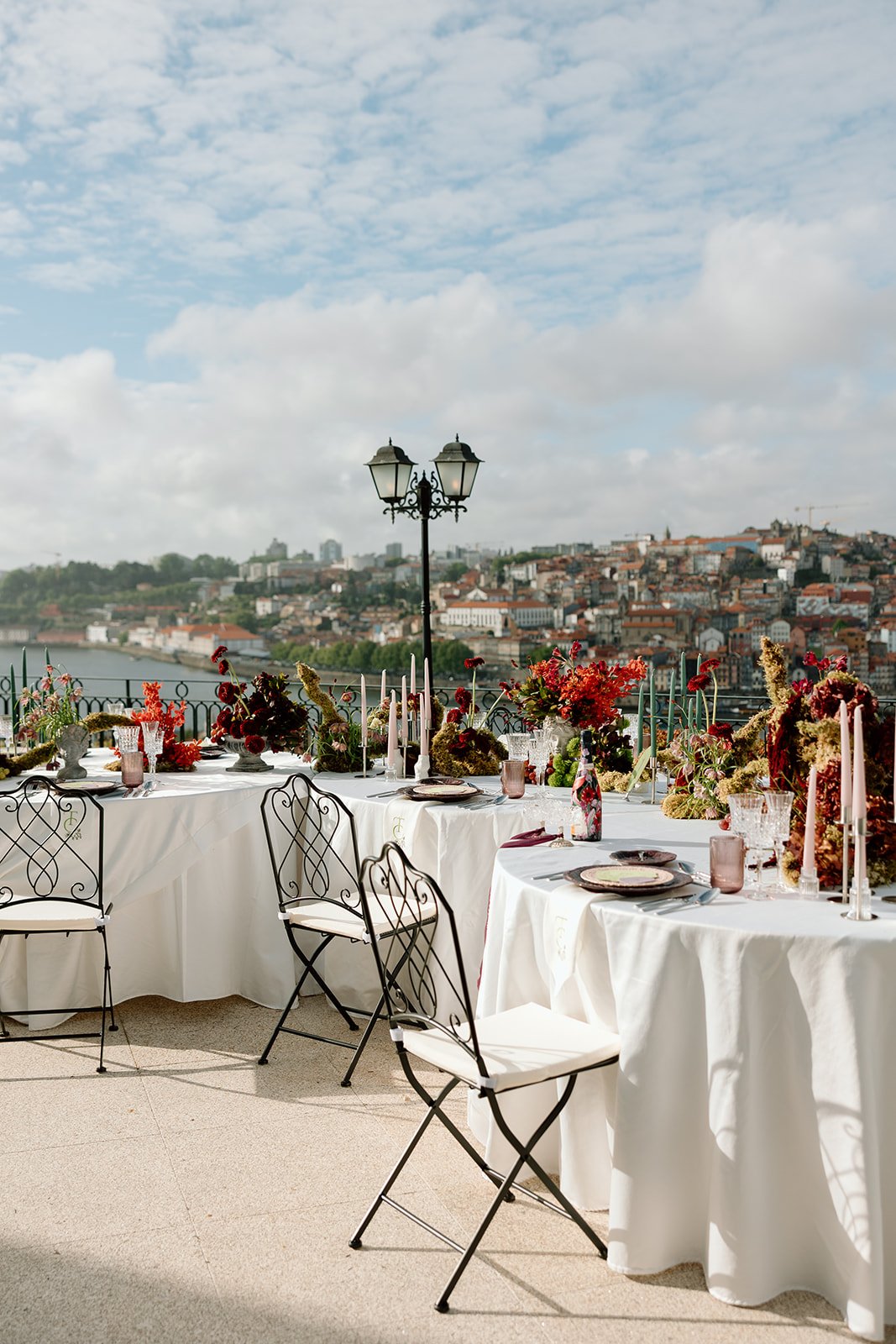
Co-Creative Director & Photography | @paulavisco
Portugal Marriage Age and Eligibility Requirements
Before diving into paperwork and timelines, it's worth confirming that you actually meet Portugal's basic eligibility rules. Both partners must be at least 18 years old to marry without restriction. Portuguese law does permit marriage from age 16 with judicial authorization or parental/guardian consent, though this is uncommon for foreign couples and adds significant processing time.
Beyond age, both partners must also be legally free to marry: unmarried, legally divorced, or widowed. If either of these applies to you, know that divorce decrees and death certificates must be original or certified copies, translated into Portuguese, and legalized (more on that in the apostille section below).
One more important note: Portugal has permitted same-sex marriage nationally since 2010, and the legal process described in this guide applies equally to same-sex couples.
How to Get a Marriage Licence in Portugal
Once eligibility is confirmed, the next step is the marriage licence itself. The marriage licence is issued by a Conservatória do Registo Civil. It confirms there is no legal impediment to the marriage and authorizes the ceremony to proceed.
Keep in mind that the licence is only valid for six months from the date of issue. If your ceremony date falls outside that window, either because of a delay in your wedding or because you applied too early, you'll need to reapply, which restarts a portion of the document review process.
As of recent years, Portugal requires marriage licence applications involving foreign nationals to be submitted through a lawyer or legal representative holding Power of Attorney, rather than directly by the couple. This is a comparatively recent procedural change, so guides or forum posts more than a couple of years old may not reflect it.
Required Documents for Marrying in Portugal as a Foreigner
With the licence process in mind, let's look at exactly what documentation you'll need to gather. Requirements vary somewhat by nationality and by the Conservatória handling your case, but the standard list includes:
Original birth certificates for both partners, translated into Portuguese by a certified translator and legalized.
Valid passports for both partners.
Divorce decree or death certificate, if either partner was previously married, translated and legalized.
Certificate of No Impediment to Marriage, confirming there is no legal barrier to the marriage under your home country's law.
Notarized prenuptial agreement certificate reflecting your chosen property regime.
Parental or guardian authorization, if either partner is 16 or 17.
Power of Attorney documentation, if a lawyer or representative is submitting the application on your behalf.
Additional documentation from your parish priest and diocese, if pursuing a Catholic ceremony.
One thing to flag: some Conservatórias also require documents to have been issued within a certain window (commonly the last 6 months) before submission, so check this with your lawyer before requesting certified copies.
“Keep in mind, if neither party of the couple is fluent in Portuguese, Portuguese law requires a sworn interpreter at both the registry appointment and the ceremony itself.
Arrange this through your lawyer or directly with a certified interpreter well in advance, since availability can be tight during peak wedding season.”
How Long Does It Take to Get Married in Portugal

Concept, Planning & Design | @claudiaandco
Co-Creative Director & Photography | @paulavisco
Venue | @theyeatman
With the documents and interpreter requirements covered, the last piece of the puzzle is timing. Once a complete application is submitted, the Conservatória typically takes four to six weeks to process it.
Portuguese law sets a minimum requirement that the application be submitted at least one month before the ceremony date, but this is a legal minimum, not a realistic planning target.

Concept, Planning & Design | @claudiaandco_
Florist | @andreiaferrasstudio
A more accurate timeline, accounting for translation and legalization delays that are largely outside your control, looks like this:
8-10 months before the wedding: engage a Portuguese lawyer or legal representative and confirm the exact document requirements for both partners' nationalities.
6-8 months before: collect original documents and begin translation and apostille or consular legalization.
5-6 months before: submit the complete documentation package to the Conservatória through your legal representative.
1 month before: absolute deadline for submission under Portuguese law. In practice, your documents should already be fully submitted well before this point.
The registrar has discretion to request further documentation or, in some cases, to reject an application that doesn't meet requirements, so building in buffer time reduces the risk of a last-minute problem affecting your wedding date.
Ready to Start Planning Your Luxury Destination Wedding in Portugal or Italy?
Every year, we partner with a carefully selected group of couples to plan European destination wedding weekends, intentionally, and with a level of care that begins the moment we start working together.
If you are in the early stages of planning a multi-day celebration in Italy or Portugal, this is where it begins.
We handle everything. Venue scouting and securing the property that is perfectly aligned with your aesthetic and your story. Vendor curation across florists, photographers, caterers, musicians, and beyond. Guest experience from the moment your people arrive, including travel logistics, hotel room blocks, welcome dinners, and curated excursions, so your wedding weekend feels like a full experience rather than a single day.
Event design that is intentional and layered, where every table, every detail, and every moment is considered. Rehearsal dinners, farewell brunches, day-of coordination, and all the behind-the-scenes logistics that make a celebration of this scale feel completely effortless for you and your guests.
You should not have to think about a single thing except showing up and being present. That is what full-service means to us, and if that is what you are looking for, we would love to connect.
Wedding Vendors
Concept, Planning & Design | @claudiaandco_
Co-Creative Director & Photography | @paulavisco
Venue | @theyeatman
Florist | @andreiaferrasstudio
Stationery | @miminhos.rita.catita
Rentals | @maison.christina
Rentals & Linen | @o_saltimbanco